Sewage Backup Cleanup in Sand Creek: Safe Removal Steps
A sewage backup is the most hazardous water loss your Sand Creek property can experience. Under the IICRC S500 standard, it is classified as Category 3 water, meaning it contains pathogens, bacteria, viruses, and chemical contaminants that require specific containment and removal procedures. This is not a mop and bucket job, and homeowner grade wet vacs will spread contamination rather than contain it.
Sand Creek Water Restoration has handled sewage losses across Central Indiana since 2018. We are IICRC certified, BBB A+ rated, and we follow the same written protocol on every job whether the backup is 20 gallons in a basement floor drain or 800 gallons through a main line collapse. The walkthrough below is the exact sequence our Sand Creek crews execute on a Category 3 loss, including the equipment specifications, dwell times, and decision points that determine whether materials are saved or removed. If your situation falls outside what we can safely handle, we will tell you directly and refer you to the right specialist. Read the steps before you touch anything, then call. Every hour a Category 3 loss sits untreated raises the risk of structural contamination, mold colonization within 24 to 48 hours, and insurance coverage disputes tied to delayed mitigation.
Why Sewage Is Treated Differently Than Clean Water
When a pipe bursts upstairs and soaks your ceiling, you are dealing with Category 1 water, which is essentially sanitary. A sewage backup is the opposite end of the scale. Category 3 water contains bacteria like E. coli and Salmonella, viruses, parasites, and organic waste that begins breaking down within hours. The smell you notice is hydrogen sulfide and ammonia gassing off, and those compounds can irritate lungs and eyes even before you touch anything. This is why Sand Creek Water Restoration crews show up in full PPE, including respirators rated for biological hazards, and why we do not allow homeowners to stay in the work zone while we extract. The drywall, carpet padding, baseboards, and any porous material that contacted the water has to be treated as contaminated. We are not being dramatic when we cut out two feet of drywall above the waterline. We are following the S500 standard that insurance adjusters expect to see documented in the file.
Most backups in Sand Creek homes trace to one of three causes. The first is a clog deep in the lateral line between the house and the city main, often from tree roots that found a hairline crack and turned it into a blockage. The second is a city main surcharge during heavy rain, where stormwater overwhelms the combined sewer and pushes waste back into the lowest fixtures in your home, usually a basement floor drain or shower. The third is a failed ejector pump or sump system in finished basements that rely on mechanical lift to move waste uphill. Knowing which one happened matters for your basement flooding response and for the claim you file later, because some causes are covered by a standard policy rider and others are not.
There is also a fourth scenario we see more often than people expect: a partial blockage that has been building for months, then finally chokes off entirely during a holiday weekend when extra guests are using the bathrooms. Grease poured down kitchen drains, so called flushable wipes, feminine hygiene products, and dental floss are the usual culprits, and they tend to collect at bends in the line where flow already slows. By the time the system fully backs up, the contamination has often been seeping into the trap primer or floor drain for some time, which is why we sometimes find elevated bacterial readings even in rooms that look untouched.
What Happens From The Moment You Call Us
When you reach Sand Creek Water Restoration, the person on the phone is gathering specific information: how deep the water is, whether it is still actively coming in, whether the area has electrical outlets at or below the waterline, and whether anyone in the home has respiratory conditions or a compromised immune system. A two person crew is typically dispatched within 2 hours anywhere in our Central Indiana service area, sooner if you are in our core neighborhoods. On arrival we shut off power to affected circuits, stop the source if it is still flowing, and begin extraction with truck mounted units that pull contaminated water at roughly 100 gallons per minute. Standing water rarely takes more than an hour or two to remove, even in a full basement. The longer phase is what comes after.
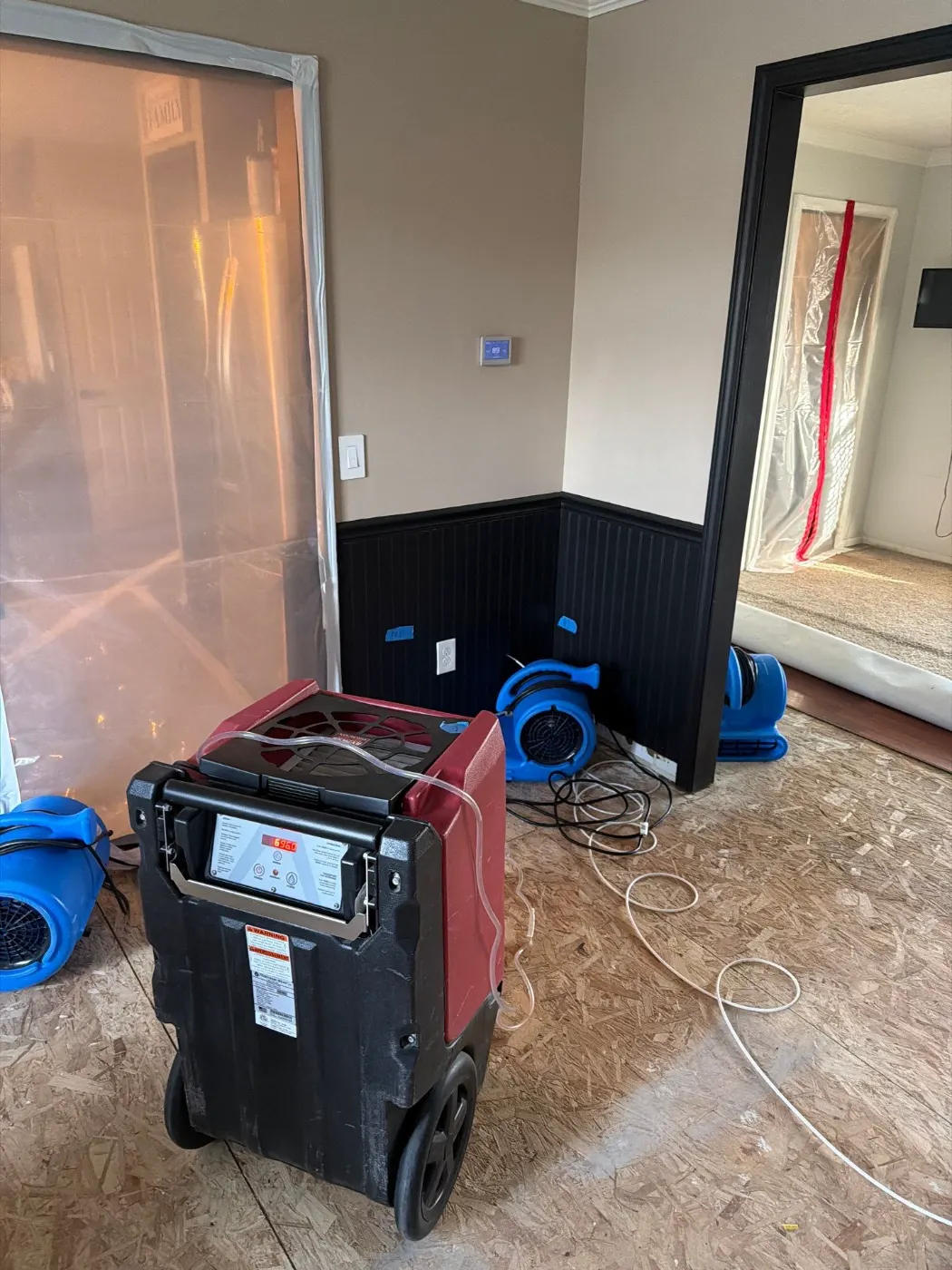
Once the liquid is gone, we remove and bag every porous material that contacted the sewage. Carpet and pad almost always go. Particleboard furniture, cardboard storage boxes, drywall up to the contamination line, and insulation behind that drywall all get cut out and hauled. Hard surfaces like concrete, sealed hardwood, and tile can usually be saved through a three step protocol: physical cleaning with hot water and detergent, application of an EPA-registered antimicrobial, and a final HEPA wipe down. Then air movers and commercial dehumidifiers run for three to five days, and we monitor moisture content daily with pin meters until subfloors read at equilibrium. This is the same drying science used in any professional water damage restoration project, just with an aggressive sanitizing layer on top.
Personal belongings get sorted into three groups while the structural work is happening. Items that are non porous and have sentimental or financial value go to an off site cleaning station where they are washed, sanitized, and returned. Items that are porous but salvageable, such as certain leather goods or solid wood furniture with intact finishes, may be treated on site with specialized cleaners. Anything that absorbed sewage and cannot be reliably decontaminated, including mattresses, upholstered furniture, stuffed animals, and most paper goods, is photographed, inventoried for the claim, and disposed of according to local biohazard waste rules. That inventory is one of the most important documents in your file, because it becomes the basis for content replacement value when the adjuster reviews the claim.
Next Step for Your Sand Creek Sewage Loss
Sewage cleanup has no shortcuts, but it does have a clear sequence. Following the steps above protects your health, your structure, and your insurance claim. Sand Creek Water Restoration runs this exact protocol on every Category 3 loss in Sand Creek, documents every reading, and communicates directly with your adjuster. Call our 24 7 line and a certified technician will be at your door, ready to start Step 5.
Cost, Insurance, And What To Expect On The Bill
Sewage cleanup in a Sand Creek home typically runs between $2,500 and $10,000 depending on the square footage affected, how far the water traveled, and how much finished material has to be removed and replaced. A small backup confined to an unfinished utility room might land near the bottom of that range. A fully finished basement with sewage that wicked into walls and under engineered flooring can climb past the top. Most standard homeowner policies do not cover sewer backup automatically, but a backup rider, usually $40 to $100 per year in premium, covers somewhere between $5,000 and $25,000 in damage depending on the carrier. If you have that rider, your deductible applies and we bill the carrier directly in almost every case. We document everything with moisture maps, photos, and itemized line items that match Xactimate pricing, which is the software adjusters use to verify scope. If you are not sure whether you have coverage, we will help you read your declarations page before any work starts.
One thing worth knowing: a sewage event often reveals other problems. Old galvanized supply lines, a sump pump on its last leg, or a foundation crack that should have been sealed years ago. We note these honestly and refer out when something falls outside our scope. Our job is to get your home back to a safe, dry, sanitary condition and to give you the information you need for whatever comes next, whether that is plumbing repair, a new basement flooding prevention plan, or a conversation with your insurance agent about better coverage before the next storm season.
After the final clearance check, we leave behind a written summary of everything performed, the antimicrobials used with their EPA registration numbers, the daily moisture logs, and a short list of recommendations for keeping the same thing from happening again. Many Sand Creek homeowners decide at that point to add a backwater valve on the main lateral, replace an aging ejector pump, or schedule annual camera inspections of the sewer line. None of those steps eliminate risk entirely, but together they shift the odds meaningfully in your favor, and they tend to pay for themselves the first time a heavy storm rolls through and your neighbors are calling us while your basement stays dry.
Frequently Asked Questions
How fast can Sand Creek Water Restoration respond to a sewage backup in Sand Creek?
Our standard emergency response time across Sand Creek and central Indiana is 60 to 90 minutes, 24 hours a day. We dispatch a containment crew first so contamination stops spreading while the full team mobilizes.
Will my homeowners insurance cover sewage cleanup?
Only if you carry a water backup and sump overflow endorsement on your Sand Creek policy. Standard policies exclude sewer backup. Sand Creek Water Restoration can review your declarations page with you and document the loss in the language adjusters expect.
Can I clean up sewage myself to save money?
We do not recommend it. Category 3 water requires PPE, negative air containment, EPA-registered disinfectants, and clearance testing. DIY cleanup almost always leaves bacteria and moisture behind, which leads to mold remediation costs that exceed the original cleanup price.
How long does sewage cleanup and restoration take?
A small toilet overflow usually wraps in 2 to 3 days. A finished basement backup in Sand Creek typically runs 7 to 14 days from extraction through structural drying and clearance testing. Rebuild adds another 1 to 3 weeks depending on materials.
Do you handle commercial sewage backups too?
Yes. Sand Creek Water Restoration services restaurants, offices, medical facilities, and multi-tenant buildings throughout Sand Creek. Commercial jobs follow the same IICRC S540 protocol with added documentation for health department compliance when required.
Have a restoration question?
Our IICRC certified Sand Creek crew is ready to help. Free assessments, estimate based on what we can sees, no pressure.